
Two more floats in the ocean for massive international collaboration
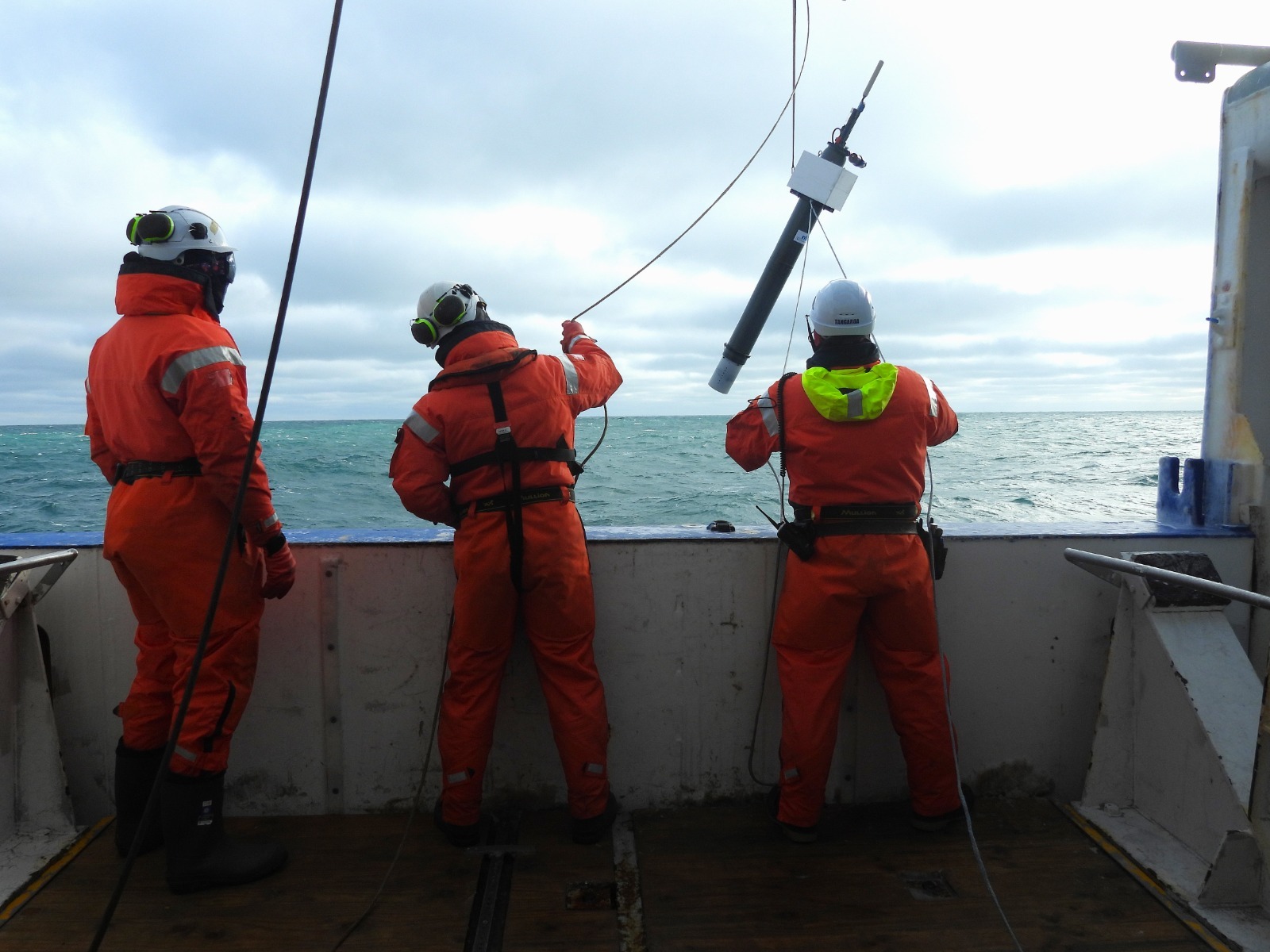
Two Argo Floats arrived in Wellington this month, on their way to join a team of 4,000 that are floating in oceans around the world.
The floats are a kind of ocean sampling “robot” that are designed to drift in currents and measure properties such as salinity, temperature, and ocean biogeochemistry.
Physical Oceanographer Dr Denise Fernandez (Earth Sciences New Zealand) has been working with Argo Floats since she was a student and considers them the second real step-change in observing the marine environment.
“They have revolutionised the way we observe the ocean," she says.
Diving deeper
Argo Floats can move up and down the water column thanks to a hydraulic pump that exchanges oil between an internal reservoir and an external bladder. Once deployed, they descend and spend nine days at 1,000m depth.
“That’s where all the more stable circulation is.” Denise says, “All of the mid-depth currents, away from the influence of weather, will give you a picture of the large-scale ocean circulation patterns.”
On day nine, the float usually drops to 2,000m (unless it’s a new ‘deep ocean’ model, which can go down to 6,000m) then slowly makes its way to the surface, collecting data as it goes. Basic floats can track temperature, salinity and pressure; while top-of-the-line models include sensors that can read oxygen, chlorophyll, nitrate, and more.
When the float reaches the sea surface it transmits the data stored in its internal memory to a satellite.
“So basically, it’s like the SIM cards we have in our phones.” Denise says, “It stores all the recorded data and then, when it’s able to find a satellite, it determines its location through GPS and sends all this information to a global data centre. In a matter of hours, the data are available to anyone who looks for that float.”
Creating a symphony of data
Since 2006 the Argo Float programme has been at critical mass – with around 4,000 floats creating global coverage of Earth’s oceans. These have been contributed by research programmes across the world, in a shining example of collaborative, open science.
“That’s the beauty of the programme,” Denise says, “a float can only be part of the Argo programme if the data are free for everyone to use. Some countries have more resources and can buy more floats, but the data are available for everybody, even if you don’t contribute a float.
“It’s a really nice way to show how the research community works. It really makes me proud to be involved in the programme.”
Data from one float might provide valuable local insights, but data from thousands have given us key information into the way our global ocean works.
Some Argo breakthroughs
A major study, led by Argo programme founder and Distinguished Professor Dean Roemmich (Scripps Institution of Oceanography, San Diego), used data from Argo Floats to look at ocean heat content trends.
The data showed the upper layers of the ocean right next to Aotearoa New Zealand is one of the regions that is warming the fastest. Denise says this is likely going to affect our climate, the occurrence of extreme weather events such as ex-tropical cyclones, and frequency of marine heatwaves.
International policy reports such as those from the IPCC (Intergovernmental Panel on Climate Change) are based on scientific studies using Argo Float data, which show how our oceans are changing and what this might mean for the future.
And of course, such high-quality data is the perfect fodder for Artificial Intelligence and machine learning models.
Denise says, “New products and tools are being developed where they use Argo data to create oxygen maps, for example, and monitor ocean deoxygenation. This is quite important because changing oxygen levels over time might impact marine ecosystems as well as fisheries and other related industries. These tools help us to understand, predict or forecast the way the ocean will change so we can plan and prepare more effectively.”
With two more Argo Floats joining the team of thousands, we’re looking forward to seeing what Denise and her team discover next about our oceans. To read how Argo Floats were involved in Phase 1 of the Antarctic Science Platform, and what they helped us learn, click the link below.
Antarctic Bottom Water and the Ross Sea: a gateway to global ocean circulation
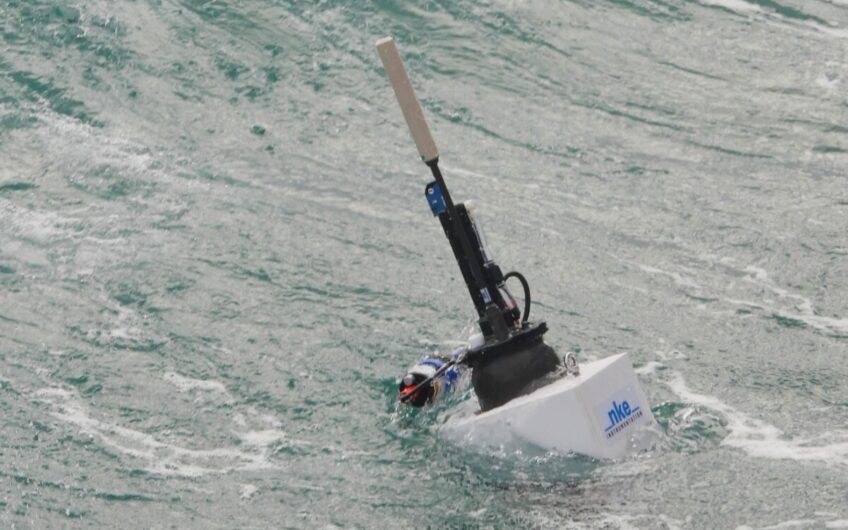
An Argo Float ready to join the team of 4,000. Credit Svenja Halfter.
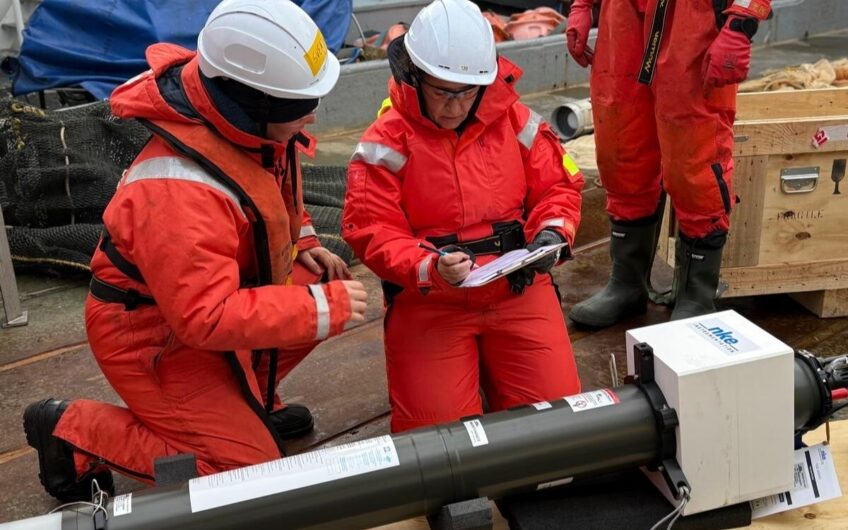
The final inspection before deployment. Credit Alina Wieczorek.
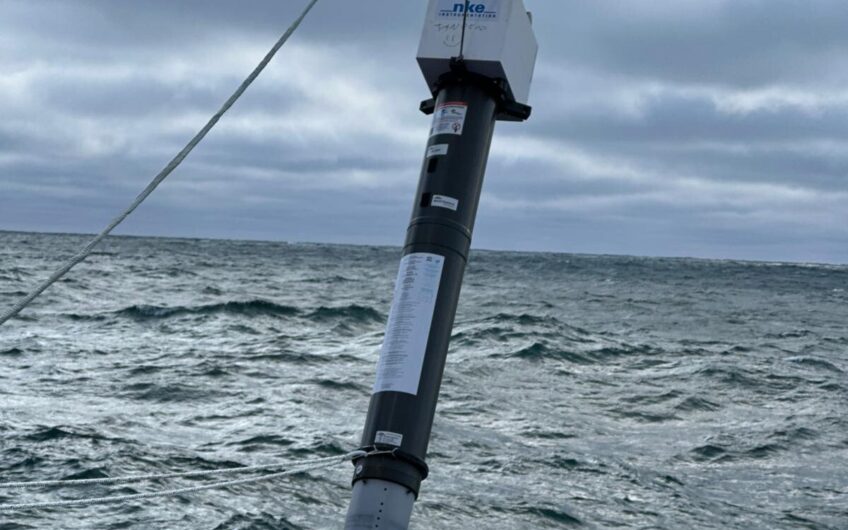
An Argo Float being deployed. Credit Denise Fernandez.