
Contract signed for Scott Base redevelopment
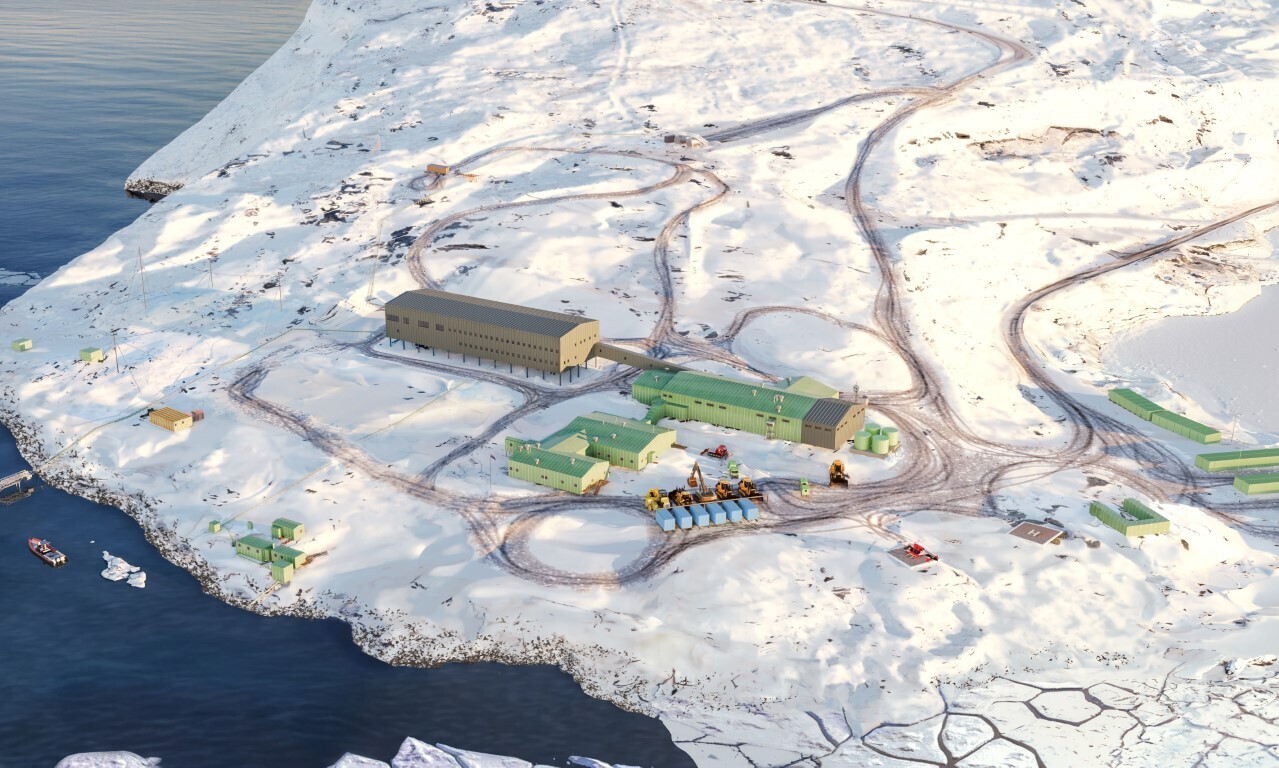
The Scott Base redevelopment has entered its delivery phase following the signing of the main construction contract with Wellington-headquartered construction firm LT McGuinness.
The milestone follows a comprehensive reset of the programme after the previous redevelopment proposal was paused because it could not be delivered within the Government's approved funding.
Cabinet approved the reset redevelopment programme Detailed Business Case in May 2026 and the Minister of Foreign Affairs and Minister of Finance authorised the project to proceed into delivery earlier in July.
Antarctica New Zealand chair Leon Grice said today's announcement represented far more than the execution of a construction contract.
"Our continuous presence and scientific programme in Antarctica are fundamental to New Zealand’s interests. Approval to Deliver and the construction contract marks the successful completion of the reset of a major public infrastructure project. And it begins the next generation in the Scott Base legacy.”
The Scott Base redevelopment will deliver a modern, fit-for-purpose Antarctic research station, including new accommodation and communal facilities, upgraded science and operational spaces, and critical infrastructure improvements.
Capacity will increase from the current 5,000m2 to approx. 6,500m2, including a new Base Services Building (over 3,000m2); refurbishment of the Hillary Field Centre (an additional 400m2); replacement of ageing infrastructure (water, wastewater and power); with an enclosed elevated link connecting new and existing facilities.
The redevelopment also includes a major wind farm upgrade and battery storage system, significantly increasing renewable energy generation, resilience and grid stability for both Scott Base and neighbouring McMurdo Station.
Mr Grice said the Board deliberately chose to pause the previous redevelopment when it became clear it could not be delivered within the approved budget.
“We took difficult decisions to pause the project, commission an independent review and fundamentally rethink the redevelopment. Those decisions have delivered a project that is affordable, deliverable and still achieves the objectives Government originally set for the redevelopment.
“We haven’t compromised the original scope of requirements or functionality to get this project back under budget. The capacity and size of the new Base remain consistent with what was originally proposed.
“We have confidence we can deliver this programme because we have significant contingency allowances and we have done extensive quantity surveying work at every step and we have a close working partnership with LT McGuinness. We have not assumed that everything will go perfectly.
“Antarctica is one of the world's most challenging construction environments. Weather, shipping, logistics and operating in a remote polar environment inevitably create uncertainty. Our programme accepts this reality, and we have prudential and tested project governance, and we have confidence the project can absorb unforeseen events without compromising our ability to deliver.
“Scientists, operational staff and support personnel will receive the modern facilities they need to live and work safely and effectively in Antarctica. What has changed is the way those facilities have been designed and how they will now be delivered."
Mr Grice said one of the most enduring outcomes from the redesign was the development of a long-term masterplan for Scott Base.
Antarctica New Zealand Chief Executive Jordy Hendrikx said the past 18 months of planning and design had significantly strengthened the redevelopment programme.
"We have now completed planning, design and procurement. We have confidence in the design, confidence in the commercial arrangements and confidence that the project is ready to move into delivery, while remaining within the Government's approved funding envelope."
Professor Hendrikx said the redevelopment remained one of New Zealand's most strategically important investments in science and infrastructure.
"Scott Base underpins New Zealand's permanent presence in Antarctica, enables world-class science and supports our obligations under the Antarctic Treaty System. This redevelopment ensures New Zealand can continue to undertake internationally significant science from Scott Base while providing modern, resilient facilities capable of supporting Antarctic operations for decades to come."
LT McGuinness Company Director Dan McGuinness said the collaborative delivery model established a year ago had been central to achieving that contractual success.
"The Early Contractor Engagement process enabled our team to work alongside Antarctica New Zealand on construction, logistics and engineering issues. Together we have developed a simpler, more buildable project with greater certainty around design, programme, logistics and cost. We are looking forward to successfully delivering Scott Base over the coming Antarctic seasons."
Construction will proceed over successive Antarctic summer seasons, reflecting the unique logistics and approximately 100-day annual construction window available on Ross Island. The coming season will see drilling and completion of piles undertaken, along with shipment of materials needed for the 2027/28 season. Practical completion remains scheduled for 2030.
Photo, top left: Scott Base redevelopment masterplan Stage 1 with new buildings shown in greyscale. The Base Services Building (left) provides 100-bed accommodation and communal facilities, while refurbishment of the Hillary Field Centre (left) provides enhanced science facilities, programme support offices, cargo handling and field operations. An enclosed elevated link connects new and existing facilities.
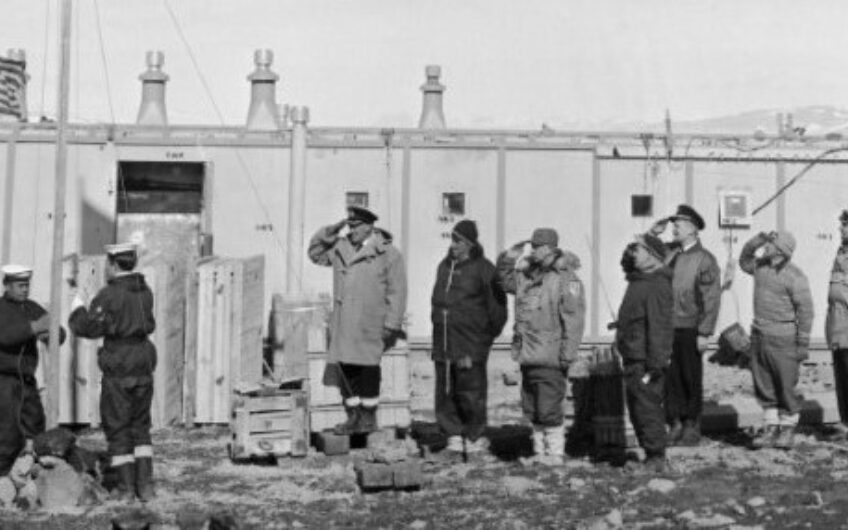
The New Zealand flag was raised above Scott Base for the first time in 1957. That's Ed Hillary (later Sir Edmund Hillary) fourth from the left. From this base, Hillary's team laid supply depots toward the South Pole for the Commonwealth Trans-Antarctic Expedition, and ultimately completed the first overland journey to the Pole since the heroic-era expeditions. Photo by John Claydon ©Antarctica New Zealand Pictorial Collection
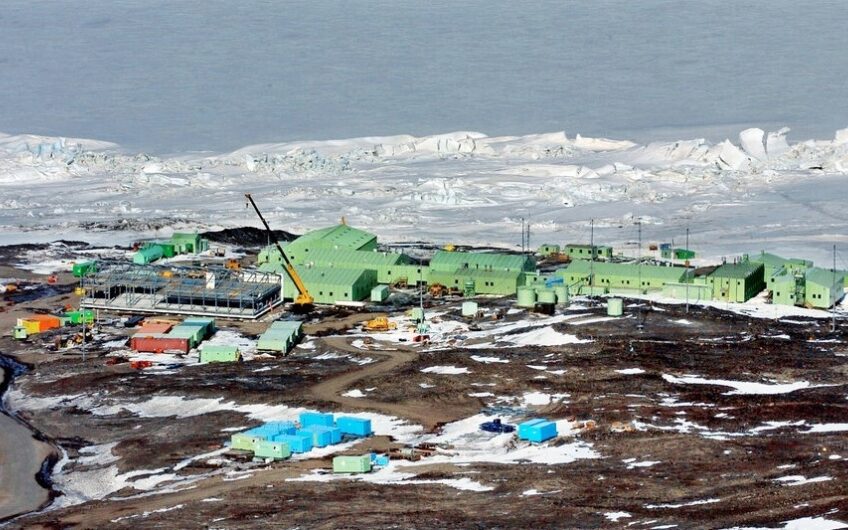
The research station grew, building by building. The Hillary Field Centre, a modern staging hub for field operations and Antarctic research expeditions, opened in November 2005. Until now, it was the largest construction project undertaken. Photo by Phil Reid.
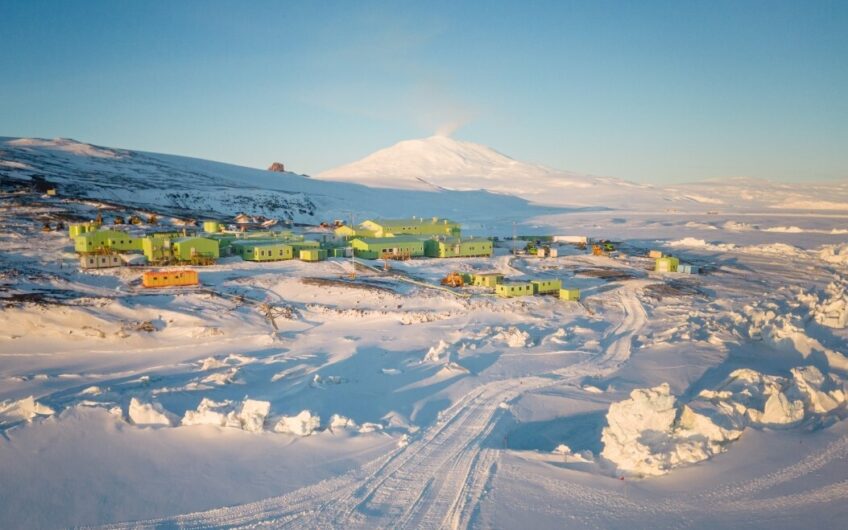
Scott Base as it looks now. The original hut TAE hut built by Sir Ed and his team still stands (it's the yellow one). Photo by Anthony Powell/Antarctica New Zealand.